Newsletter Subscribe
Enter your email address below and subscribe to our newsletter
Deepseek AI
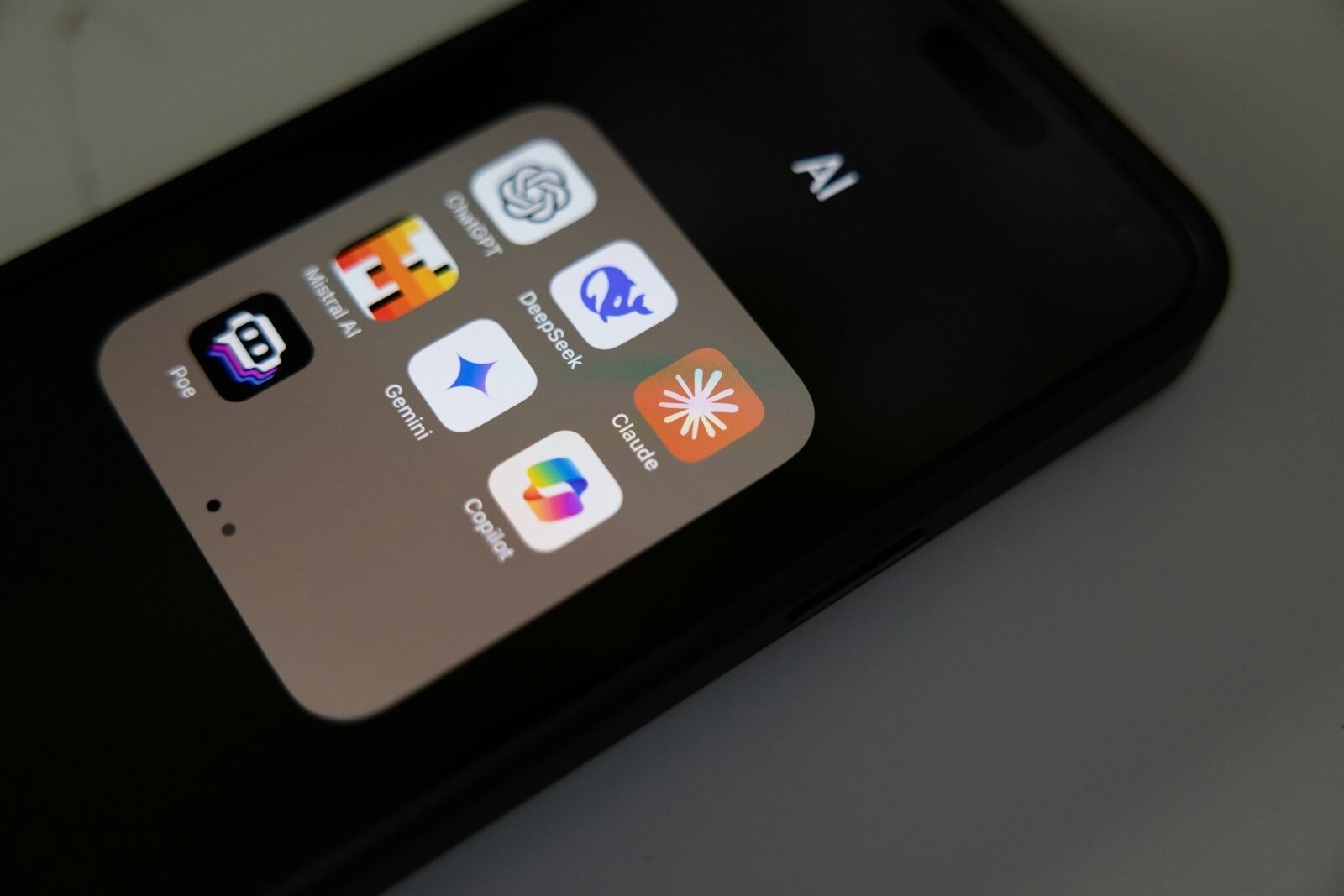
We didn’t switch because DeepSeek was “better.” We switched because OpenAI started getting in the way of a very specific workflow—and then DeepSeek created a different set of problems.
I wouldn’t frame it as some big strategic migration. It didn’t feel like that while it was happening.
It was more like… small annoyances stacking up inside our OpenAI setup until one day it became obvious we were spending more time fighting the system than using it.
And even then, we didn’t fully “switch.” We just started routing certain workflows through DeepSeek. Then more. Then eventually most of them.
The Man Behind DeepSeek (Liang Wenfeng)
But the reasons weren’t the ones you usually see in comparison posts.
The breaking point wasn’t cost.
Everyone assumes that. It wasn’t.
It was context collapse.
We were running long, multi-step workflows—mostly content and research pipelines—and somewhere around step three or four, the outputs would start losing alignment with the original input.
Not dramatically. Just subtly.
A constraint would disappear. A tone instruction would get softened. A structural rule would get ignored.
If you looked at any single output, it seemed fine.
But if you compared it to the original brief, it had drifted.
That drift compounds over chained steps.
By the time you hit the final output, it’s still coherent, still readable… just not what you asked for.
That’s harder to catch than a failure.
We tried fixing it inside the OpenAI stack.
Shorter prompts. More explicit constraints. Re-injecting context at every step.
That helped, but it also made everything heavier.
Prompts got bloated. Latency went up. Costs crept up—not because of token pricing, but because of how much repetition we needed just to maintain alignment.
It started feeling like we were constantly reminding the model what we had already told it.
That’s when DeepSeek came into the picture.
The first thing we noticed wasn’t intelligence. It was tolerance.
DeepSeek handled messy, overloaded prompts without immediately collapsing into summaries or skipping details.
We could throw in:
…and it would at least attempt to reconcile everything instead of pruning aggressively.
That mattered more than accuracy in the early stages.
Because at that point, we just needed the system to hold onto the mess long enough for us to shape it.
OpenAI—especially in GPT-5.5—felt more optimized for clean inputs.
Which is great in theory.
But most real inputs aren’t clean.
So we started shifting ingestion workflows to DeepSeek.
Just that part.
And it worked well enough that we pushed further.
Where things got complicated was agent behavior.
We had already built a decent amount of infrastructure around OpenAI’s agent patterns. Predictable tool usage, relatively consistent step execution, fewer surprises.
DeepSeek agents… don’t behave like that.
They’re more opportunistic.
Sometimes that’s useful. They’ll find shortcuts or combine steps in ways that actually improve efficiency.
Other times, they just skip things.
Not because they can’t do them, but because they decide they’re unnecessary.
That’s not something you can easily guard against with prompt instructions.
We had one case where a validation step was consistently skipped—not always, just often enough to be a problem.
The agent “decided” the previous step already ensured quality.
It didn’t.
We tried tightening control.
Explicit step-by-step instructions, no deviation allowed.
That worked briefly.
Then the agents started following instructions too literally and breaking on edge cases.
There’s no stable middle ground yet.
You either get initiative or compliance, and both come with tradeoffs.
Memory 2.0 was another factor in the switch, but not in the way we expected.
OpenAI’s memory handling had improved, but it still felt somewhat scoped and cautious.
DeepSeek’s memory layer felt more… aggressive.
It would store things quickly, sometimes after a single interaction.
At first, that seemed powerful.
Less repetition, more personalization, better continuity.
But it didn’t take long before it started storing the wrong signals.
A one-time preference would become permanent.
A temporary correction would shape future outputs indefinitely.
We had a case where a single formatting tweak—something minor—ended up influencing every subsequent output for that client.
And not subtly.
It basically rewrote our default structure without asking.
There’s no clean UI for managing that kind of memory drift.
You can reset it, but you can’t really understand it.
So we started building workarounds.
Manual resets. Memory “checkpoints.” Even injecting counter-instructions to override stored behavior.
It worked, but it felt fragile.
Like we were constantly negotiating with a system that had its own interpretation of history.
One thing DeepSeek did better, though, was early-stage synthesis.
When inputs were incomplete or contradictory, it didn’t freeze or over-sanitize.
It would generate something usable, even if imperfect.
That saved time.
Not because the outputs were perfect, but because they gave us something to react to.
OpenAI often required cleaner inputs to reach that same starting point.
The switch accelerated after we hit scaling issues on the OpenAI side.
Not performance scaling—behavioral scaling.
When we ran larger batches, we noticed increased variability in outputs.
Not catastrophic, just inconsistent.
We initially blamed our own system.
Then we ran the same batches through DeepSeek.
Different issues, but slightly more stable in terms of structure retention.
That was enough to justify shifting more workflows.
But here’s the part that doesn’t show up in most “we switched” stories:
We didn’t get a clean upgrade.
We traded one set of problems for another.
With OpenAI, the friction was around maintaining context and avoiding drift over long chains.
With DeepSeek, the friction moved into:
It wasn’t better. It was different.
There was also this subtle psychological shift.
With OpenAI, we trusted the system more, even when it was wrong.
With DeepSeek, we trusted it less—but it sometimes produced better intermediate results.
That changes how you design workflows.
We started inserting human checkpoints earlier, not because outputs were worse, but because behavior was less predictable.
That reduced efficiency.
But increased confidence.
At one point, we tried going back.
Running a hybrid system.
DeepSeek for ingestion and synthesis, OpenAI (GPT-5.5) for refinement and validation.
On paper, that should have worked.
In practice, context translation became a problem.
What DeepSeek considered “resolved” context didn’t always map cleanly into OpenAI’s expectations.
Subtle differences in interpretation would show up in the final output.
Nothing obviously broken, just… off.
And those small misalignments add up.
There was one incident that kind of locked in the switch.
We had a batch processing job—about 80 items.
Midway through, the OpenAI pipeline started truncating parts of the structure.
Not failing. Just compressing.
We didn’t catch it immediately because outputs looked fine at a glance.
But key sections were missing.
We reran the same batch through DeepSeek.
It preserved structure more consistently, even if some sections were rougher.
That was enough.
We shifted the entire pipeline.
Not everything improved.
Latency was less predictable.
Some runs were fast. Others stalled without clear reason.
We never fully isolated why.
It didn’t block us, but it made planning harder.
Another issue was retries.
DeepSeek sometimes requires more retries to get a clean output in agent chains.
Not because it fails outright, but because intermediate steps drift.
And retries are expensive—not just in cost, but in time and system complexity.
We had to redesign parts of our pipeline to make retries more modular.
Instead of rerunning everything, we tried isolating failure points.
That helped, but only partially.
If I had to explain the switch in one sentence, it wouldn’t be “DeepSeek is better.”
It would be:
DeepSeek tolerated the kind of messy, real-world inputs we were dealing with, and OpenAI didn’t—at least not without a lot of overhead.
But that tolerance comes with instability.
And you feel that instability more as your system grows.
There are still parts of our stack that use OpenAI.
Mostly for tasks where predictability matters more than flexibility.
Structured transformations. Final formatting. Some validation layers.
We didn’t fully leave.
We just stopped relying on it as the core.
The thing that surprised me most is how much the decision wasn’t about model capability.
It was about behavior under imperfect conditions.
Benchmarks don’t capture that.
They don’t show what happens when:
That’s where the real differences show up.
And honestly, I’m not sure we’d make the same decision again today.
Not because DeepSeek failed us, but because the tradeoffs are still shifting.
GPT-5.5 has improved in some areas.
DeepSeek has changed in others.
The gap isn’t static.
Some of the questions we kept asking during this whole transition:
Why does DeepSeek hold context better but struggle with consistency across steps?
Feels like it prioritizes retention over constraint enforcement, but that’s more of an observation than a confirmed behavior.
Is agent unpredictability a feature or a bug?
Depends on the use case. For exploration, it’s useful. For production pipelines, it’s risky.
Why does Memory 2.0 store low-signal events so aggressively?
No clear answer. It seems optimized for personalization, but without strong filtering.
Did switching actually save time?
In some parts of the workflow, yes. In others, we just moved the effort somewhere else.
Is a hybrid stack the real answer?
Maybe. But it introduces its own complexity, especially around context alignment.
This isn’t a clean “we switched and everything improved” story.
It’s more like we moved to a system that fits our inputs better, but requires more vigilance to keep stable.
And that tradeoff… still feels unresolved.
Some days it’s clearly the right choice.
Other days we spend hours debugging something that didn’t used to break.
If you’re considering a similar switch, the only thing I’d say is:
Don’t evaluate models in isolation.
Test them inside your actual workflow.
With your real inputs.
Under real load.
That’s where the differences show up.
And they’re rarely the ones highlighted in feature comparisons.
DeepSeek vs. OpenAI: Comparing the New AI Titans – DataCamp
We didn’t switch because DeepSeek was perfect.
We switched because it failed in ways that were easier for us to work with.
That’s not a strong endorsement.
But it’s the most honest version of what happened.