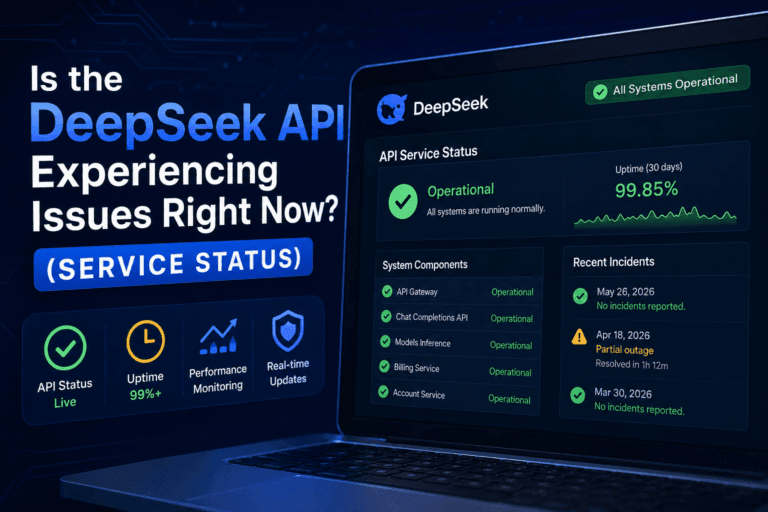

🔍 Introduction to DeepSeek Outages
AI systems are incredibly powerful—but they’re not immune to failure. If you’re relying on AI APIs, understanding What Happens During a DeepSeek Outage? is crucial for maintaining performance and minimizing disruption.
An outage can feel sudden, but behind the scenes, multiple processes unfold—from detection to recovery. These events can affect developers, businesses, and end users in different ways.
📌 What is a DeepSeek Outage?
A DeepSeek outage occurs when the services provided by DeepSeek become unavailable or degraded. This may include:
- API failures
- Slow response times
- Complete service shutdown
Outages can last from a few seconds to several hours, depending on the issue.
⚠️ Why Outages Occur in AI Systems
Outages happen due to various reasons:
- Infrastructure failures
- Software bugs
- Unexpected traffic spikes
- External network disruptions
Even advanced systems can face downtime under extreme conditions.
🧠 Overview of DeepSeek Infrastructure
⚙️ How DeepSeek Works
The DeepSeek platform uses complex infrastructure to deliver AI services, including:
- Cloud servers
- Load balancers
- Data centers
- AI processing units
These components work together to process millions of requests.
🏗️ Core Components of the System
Key components include:
- API gateways
- Model inference engines
- Storage systems
- Networking layers
A failure in any of these can trigger an outage.
⚡ Common Causes of DeepSeek Outages
🖥️ Server Failures
Hardware or cloud server issues can lead to downtime.
🌐 Network Issues
Connectivity problems can block API access.
🐞 Software Bugs
New updates may introduce unexpected errors.
📈 Traffic Overload
High demand can overwhelm servers, causing slowdowns or crashes.
🚨 What Happens During a DeepSeek Outage?
🔎 Initial Signs of an Outage
The first signs often include:
- Slower API responses
- Increased error rates
- Timeouts
These early warnings signal deeper issues.
❌ API Failures and Errors
Developers may encounter:
- 500 Internal Server Errors
- Connection timeouts
- Failed requests
🐢 Increased Latency
Even if the system isn’t fully down, performance may degrade significantly.
📱 Immediate Impact on Applications
🔧 Broken Features
Applications relying on DeepSeek may:
- Stop generating responses
- Fail to process data
- Crash entirely
😟 User Experience Disruption
Users may experience:
- Delays
- Errors
- Incomplete actions
This can quickly lead to frustration.
💼 Impact on Businesses
💸 Revenue Loss
Outages can result in:
- Lost transactions
- Missed opportunities
- Reduced conversions
🤝 Customer Trust Issues
Repeated outages can damage brand reputation and user trust.
👨💻 Developer Challenges During Outages
🧩 Debugging Difficulties
It’s often hard to determine whether the issue is:
- Internal code
- External API
🔗 Dependency Failures
If DeepSeek fails, dependent systems may also break.
🛠️ DeepSeek’s Incident Response Process
🔍 Detection and Diagnosis
Monitoring systems detect anomalies such as:
- High error rates
- Server overload
Engineers then diagnose the root cause.
⚙️ Resolution Steps
Steps may include:
- Restarting servers
- Rolling back updates
- Scaling resources
📢 Communication During Outages
📡 Status Updates
DeepSeek may provide:
- Basic outage notifications
- Limited updates
⚠️ Transparency Issues
Compared to OpenAI, communication may be less detailed.
🔄 Recovery Phase
🔌 System Restoration
Once the issue is fixed:
- Services are gradually restored
- Traffic is redistributed
📊 Performance Stabilization
Systems are monitored to ensure stability before full operation resumes.
📑 Post-Outage Analysis
🔍 Root Cause Investigation
Engineers analyze:
- What caused the outage
- How it can be prevented
🛡️ Preventive Measures
Future improvements may include:
- Better monitoring
- Infrastructure upgrades
🧰 How to Prepare for DeepSeek Outages
📊 Monitoring Tools
Use tools to detect outages early.
🔁 Backup Systems
Implement fallback systems to maintain functionality.
✅ Best Practices for Handling Outages
🔄 Retry Mechanisms
Automatically retry failed requests.
🛡️ Failover Strategies
Switch to backup services when outages occur.
⚖️ Comparing with Other AI Platforms
🔍 DeepSeek vs OpenAI
Compared to OpenAI:
- OpenAI offers more stable uptime
- DeepSeek is still improving reliability
📉 Reliability Differences
DeepSeek may experience more frequent minor outages, while OpenAI focuses on consistency.
🔮 Future of AI System Reliability
🚀 Improved Infrastructure
AI platforms are investing in:
- Better servers
- Global data centers
🤖 Predictive Monitoring
Future systems may predict outages before they happen.
❓ FAQs
1. What causes a DeepSeek outage?
Server failures, network issues, software bugs, or high traffic loads.
2. How long do outages usually last?
They can range from seconds to several hours.
3. Can I prevent outages?
You can’t prevent them entirely but can prepare with monitoring and backups.
4. How do outages affect applications?
They can cause errors, delays, or complete failures.
5. Does DeepSeek notify users during outages?
Yes, but updates may be limited.
6. What should developers do during an outage?
Implement retries, monitor systems, and use fallback solutions.
🏁 Conclusion
Understanding What Happens During a DeepSeek Outage? helps developers and businesses prepare for the unexpected. While outages are unavoidable, their impact can be minimized with proper planning, monitoring, and recovery strategies.
As AI platforms evolve, reliability and transparency will continue to improve. Until then, being proactive is the best defense against downtime.