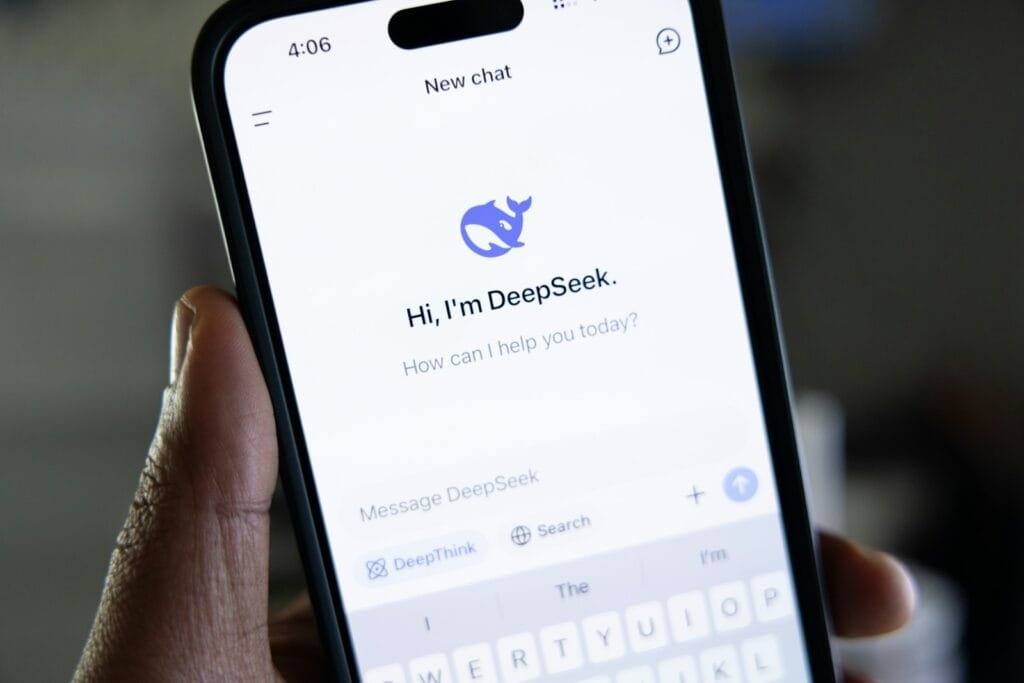




DeepSeek V3 is designed for complex multi-step reasoning tasks such as debugging code, analyzing documents, and planning workflows.
Artificial intelligence models are increasingly used for tasks that require more than simple question-and-answer interactions. Many real-world applications involve multi-step reasoning, where an AI system must analyze information, break a problem into stages, and produce a structured solution.
The DeepSeek V3 DeepSeek V3, developed by DeepSeek DeepSeek, is designed to perform well in these types of analytical tasks.
From coding assistance to research workflows, DeepSeek V3 can support complex processes that require reasoning across multiple steps.
Multi-step tasks are problems that cannot be solved with a single direct response.
Instead, the system must:
This type of reasoning is essential in many professional workflows.
Examples include:
Simple AI responses may work for basic questions, but complex tasks require deeper reasoning.
For example:
A developer debugging an application may need the AI to:
This type of structured thinking is where advanced language models provide the most value.
DeepSeek V3 is designed with reasoning capabilities that allow it to process layered instructions and complex prompts.
Key features include:
The model can break problems into smaller logical steps before producing a final answer.
DeepSeek V3 can analyze larger prompts, allowing it to consider more information when solving problems.
Complex prompts with multiple instructions can be interpreted and processed effectively.
Developers frequently use DeepSeek models to analyze technical systems and codebases.
DeepSeek V3 can support many real-world workflows that require sequential reasoning.
Developers can ask the model to analyze an error, inspect potential causes, and recommend solutions.
Example prompt:
“Explain why this Python function fails and suggest a fix.”
Researchers often need to interpret large amounts of information.
DeepSeek V3 can:
Automation systems may require planning steps before execution.
Example:
Designing a multi-step workflow for:
The model can analyze long documents and extract insights through structured reasoning.
This is useful for:
Users can improve AI performance by structuring prompts clearly.
Helpful strategies include:
Example prompt:
“Explain your reasoning step by step.”
This encourages the model to show its logical process.
Large problems can be divided into smaller prompts.
For example:
The more relevant information included in a prompt, the better the model can reason about the problem.
Even advanced AI models have limitations.
Some potential challenges include:
Because of this, human review is still important for critical tasks.
DeepSeek V3 is especially useful for workflows that require structured reasoning.
Examples include:
These types of tasks benefit from AI systems capable of multi-step reasoning.
DeepSeek V3 demonstrates strong performance in complex multi-step tasks that require structured reasoning and long-context processing.
For developers, researchers, and organizations working with analytical workflows, these capabilities make the model a powerful tool for solving complex problems.
While AI should not replace human judgment, it can significantly improve productivity when used as part of a structured workflow.
Multi-step tasks require an AI system to analyze a problem in stages before producing a final answer.
DeepSeek V3 can assist with analytical tasks such as debugging code, analyzing documents, and planning workflows.
Many real-world problems require sequential analysis rather than simple responses.
Yes. Developers often use it to analyze code, debug errors, and understand technical systems.
Yes. It can summarize documents and extract insights from large text inputs.
Yes. Clear prompts and step-by-step instructions usually improve results.
No. AI assists reasoning but should not replace human expertise.
Technology, research, finance, and data analysis fields frequently use reasoning-focused AI systems.
Yes. AI models can help design and analyze complex automation processes.
It focuses on reasoning capabilities and long-context processing for complex tasks.