Newsletter Subscribe
Enter your email address below and subscribe to our newsletter
Deepseek AI
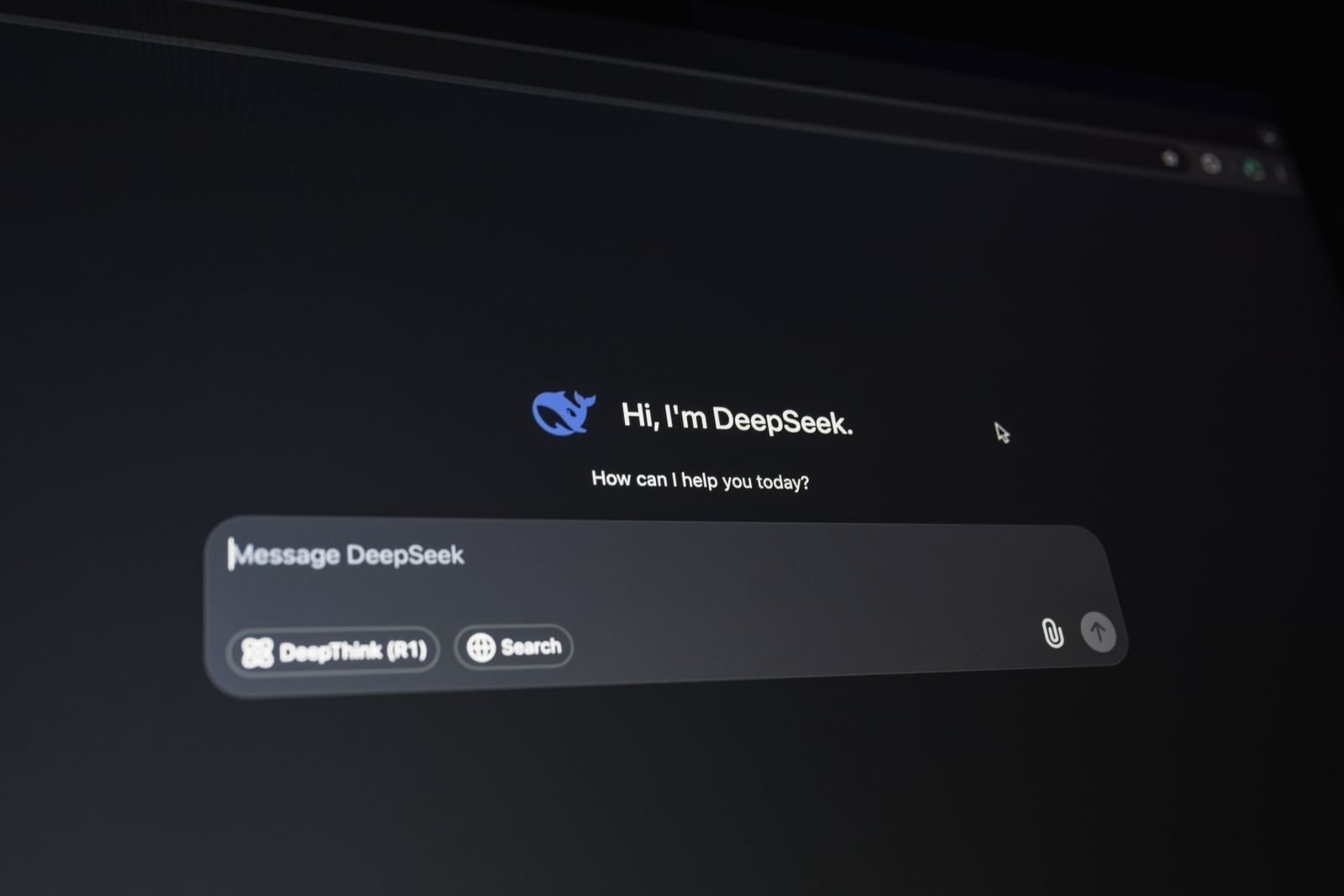
Discover the biggest lessons teams learned while deploying DeepSeek in production. From AI hallucinations and latency issues to workflow automation, observability, security, and scalable infrastructure, this in-depth guide explores real-world DeepSeek deployment stories and practical engineering insights for building reliable AI systems.
Artificial intelligence projects rarely fail because the model is incapable. More often, they fail because production environments expose challenges that prototypes never reveal: latency spikes, prompt instability, hallucinations under pressure, infrastructure costs, poor observability, and unpredictable user behavior.
The Man Behind DeepSeek (Liang Wenfeng)
Over the past year, teams deploying DeepSeek models across customer support, coding assistants, research workflows, analytics systems, and enterprise automation stacks have discovered something important: building with large language models is not the same as operating them at scale.
This article explores practical lessons learned from deploying DeepSeek in real-world production systems. Rather than focusing on benchmarks or demos, these stories examine operational realities — what worked, what broke, and how engineering teams adapted.
The goal is simple: help developers, startups, and enterprises avoid common mistakes while building reliable AI-powered applications using DeepSeek.
DeepSeek’s ecosystem includes reasoning-focused APIs, coding models, multimodal systems, and automation capabilities already highlighted across the platform’s developer documentation and integration guides.
A weekend prototype usually looks impressive.
You connect an API, write a prompt, and suddenly the application can summarize documents, generate code, or automate tasks. Early demos often convince teams they are “90% done.”
In reality, production deployment is where the real engineering work begins.
Teams deploying DeepSeek into live environments consistently report the same transition points:
| Prototype Environment | Production Environment |
|---|---|
| Single user | Thousands of concurrent requests |
| Clean prompts | Messy real-world input |
| Stable latency | Network unpredictability |
| Manual oversight | Autonomous execution |
| Limited context | Massive enterprise data |
| Temporary sessions | Persistent memory requirements |
| Tolerable hallucinations | Business-critical accuracy |
The difference is not just scale. It is reliability.
A chatbot generating one inaccurate answer during testing may seem harmless. A production financial assistant doing the same thing for 100,000 users becomes a compliance issue.
This is why the most successful DeepSeek deployments treated AI not as a “feature,” but as infrastructure.
A mid-sized SaaS company wanted to reduce support ticket load without sacrificing customer satisfaction.
Their first implementation was straightforward:
The prototype worked extremely well internally.
Then they launched publicly.
Within 48 hours they discovered three problems:
The AI sounded intelligent, but occasionally invented nonexistent settings or workflows.
That was unacceptable for customer support.
Initially, the team relied on massive prompts containing entire documentation sections.
This caused:
The fix was implementing retrieval-augmented generation (RAG).
Instead of injecting all documentation into every request, they:
This dramatically improved:
The lesson became clear:
Production AI systems need information architecture, not giant prompts.
One major operational breakthrough came from introducing confidence thresholds.
Instead of forcing the model to answer every question, the system could now respond:
Counterintuitively, user trust increased.
Customers preferred cautious accuracy over confident hallucinations.
The support team eventually implemented:
Internal testing occurred under low traffic conditions.
Production deployment revealed:
The solution involved:
Average perceived latency dropped from 7 seconds to under 2 seconds.
The key insight:
Users judge AI quality partly by response speed.
Even good answers feel unreliable if they arrive too slowly.
Coding assistants are among the fastest-growing AI applications.
One enterprise engineering team integrated DeepSeek Coder into their internal development platform to:
The pilot showed immediate productivity gains.
Then governance issues emerged.
The model occasionally:
This exposed an important production reality:
AI-generated code must be treated as untrusted input.
The engineering organization added:
The AI accelerated coding, but humans still governed standards.
Early deployments assumed developers would naturally review AI-generated code carefully.
In practice:
The solution was creating layered approval systems.
The workflow evolved into:
The AI became a productivity amplifier, not an autonomous engineer.
Generic requests like:
“Write an API endpoint”
produced inconsistent results.
But structured prompts with:
dramatically improved output quality.
The organization eventually built reusable prompt templates for:
This reduced variability across teams.
A fintech analytics startup deployed DeepSeek as a research summarization and insight engine.
The system processed:
Their prototype appeared highly accurate.
Production deployment uncovered a critical issue:
summaries occasionally omitted risk-related details.
For financial users, omission can be as dangerous as hallucination.
LLMs naturally compress information when summarizing.
In sensitive domains, this creates hidden risks:
The company redesigned its architecture.
Instead of a single summary stage, they implemented:
Outputs now included:
The result was lower hallucination rates and stronger analyst trust.
Initially, the system generated large narrative summaries.
Analysts struggled to validate them quickly.
The team transitioned to structured JSON responses:
This improved:
One of the biggest production lessons from DeepSeek deployments is this:
The best production AI systems often generate structured data, not paragraphs.
An EdTech platform integrated DeepSeek for personalized tutoring.
The AI generated:
The challenge was not capability.
It was consistency.
Students became confused when:
The solution involved:
The platform eventually built “instruction policies” controlling:
This created a more predictable learning experience.
The platform initially stored huge conversational histories.
Over time this caused:
The engineering team redesigned memory handling using:
The AI became both faster and more accurate.
The lesson:
More context is not always better context.
Automation is one of the strongest use cases for reasoning-focused models. DeepSeek workflows have already demonstrated strong integration potential across Slack, CRMs, reports, and operational systems.
One operations company integrated DeepSeek into:
Their goal was aggressive automation.
Reality forced moderation.
The initial system automatically:
Several errors occurred:
The company adopted a “human-in-the-loop” model.
AI could:
Humans retained authority over:
This hybrid model dramatically improved reliability.
Traditional observability tools were insufficient.
CPU usage and response times did not reveal:
The company introduced AI-specific observability metrics:
This became essential for long-term stability.
Beyond specific stories, production teams consistently reported several infrastructure realities.
Early cost estimates are usually wrong.
Why?
Because production introduces:
Teams reduced costs through:
The most successful deployments treated token efficiency as an engineering discipline.
Many organizations initially used a single model for everything.
This proved inefficient.
Eventually they separated workloads:
| Task | Better Approach |
|---|---|
| Simple classification | Lightweight models |
| Coding | DeepSeek Coder |
| Visual analysis | DeepSeek VL |
| Long reasoning | Logic-focused models |
| Search enrichment | Retrieval pipelines |
This reduced both cost and latency.
Production outages happen.
Rate limits happen.
Context corruption happens.
Successful deployments implemented:
Users tolerate limited functionality better than complete failure.
Security became one of the largest operational concerns in production AI deployments.
Many teams underestimated prompt injection attacks.
Users attempted to:
Mitigations included:
Production AI systems must assume adversarial input.
Organizations handling:
implemented additional safeguards:
Security teams increasingly treat LLMs as privileged infrastructure components.
Deploying DeepSeek successfully was rarely about the model alone.
Team structure mattered enormously.
The strongest teams combined:
AI systems sit at the intersection of multiple disciplines.
The best products acknowledged model limitations openly.
Examples:
Good UX reduced user frustration dramatically.
Traditional software eventually stabilizes.
LLM systems evolve continuously:
Production AI requires ongoing evaluation pipelines.
Top teams continuously test:
Across industries, successful teams shared several traits.
Not magic.
Not a novelty.
Infrastructure.
They invested in:
Reliable partial automation consistently outperformed risky full automation.
Users accepted:
if the system remained dependable.
Strong production AI systems combine:
The model is only one layer.
Before deploying DeepSeek into production, teams should evaluate the following areas carefully.
| Area | Key Questions |
|---|---|
| Reliability | What happens if the model fails? |
| Latency | Is response time acceptable under load? |
| Cost | Have token costs been modeled realistically? |
| Security | Can prompts be injected or manipulated? |
| Observability | Can hallucinations be tracked? |
| Retrieval | Is context grounded and relevant? |
| Governance | Are high-risk actions human-reviewed? |
| UX | Can users verify outputs easily? |
| Compliance | Is sensitive data isolated correctly? |
| Evaluation | Are outputs continuously tested? |
This checklist often determines whether an AI product survives beyond its pilot phase.
As reasoning models improve, deployment complexity will increase alongside capability.
Future production systems will likely include:
But the core lessons will remain the same:
DeepSeek’s growing ecosystem of APIs, coding tools, reasoning systems, and workflow integrations provides a strong foundation for production-grade AI applications already being explored across developer documentation and integration tutorials.
Deploying AI in production is fundamentally different from experimenting with AI in a sandbox.
The organizations succeeding with DeepSeek are not simply choosing powerful models. They are building disciplined operational systems around those models.
The biggest lesson from real-world deployments is surprisingly simple:
AI systems succeed when engineering discipline catches up to model capability.
DeepSeek can accelerate automation, reasoning, coding, analytics, and support workflows dramatically. But production success depends on architecture, governance, monitoring, and thoughtful user experience design.
The companies winning with AI are not the ones with the flashiest demos.
They are the ones building reliable systems users can trust every day.
The biggest challenges include latency management, hallucination control, prompt consistency, retrieval accuracy, infrastructure scaling, observability, and security risks such as prompt injection attacks. Most teams discover that production AI requires far more engineering discipline than prototype environments.
Companies typically reduce hallucinations by implementing retrieval-augmented generation (RAG), structured outputs, confidence scoring, human review workflows, and smaller domain-specific context windows instead of oversized prompts.
Yes. DeepSeek is well-suited for enterprise deployments involving automation, coding assistants, analytics, customer support, and reasoning workflows. Successful deployments usually include governance systems, monitoring pipelines, fallback mechanisms, and secure data handling practices.
Key practices include request batching, async processing, streaming responses, caching, context optimization, regional deployment strategies, and using specialized models for specific workloads instead of one general-purpose model.
Observability helps teams monitor hallucinations, prompt drift, retrieval quality, latency spikes, and model reliability over time. Traditional infrastructure monitoring alone is not enough for AI systems operating at scale.
Best Use Cases for the DeepSeek API Platform (2026) — What Actually Holds Up in Production
DeepSeek vs OpenAI Pricing in 2026 — Real Cost Scenarios (Not the Marketing Numbers)