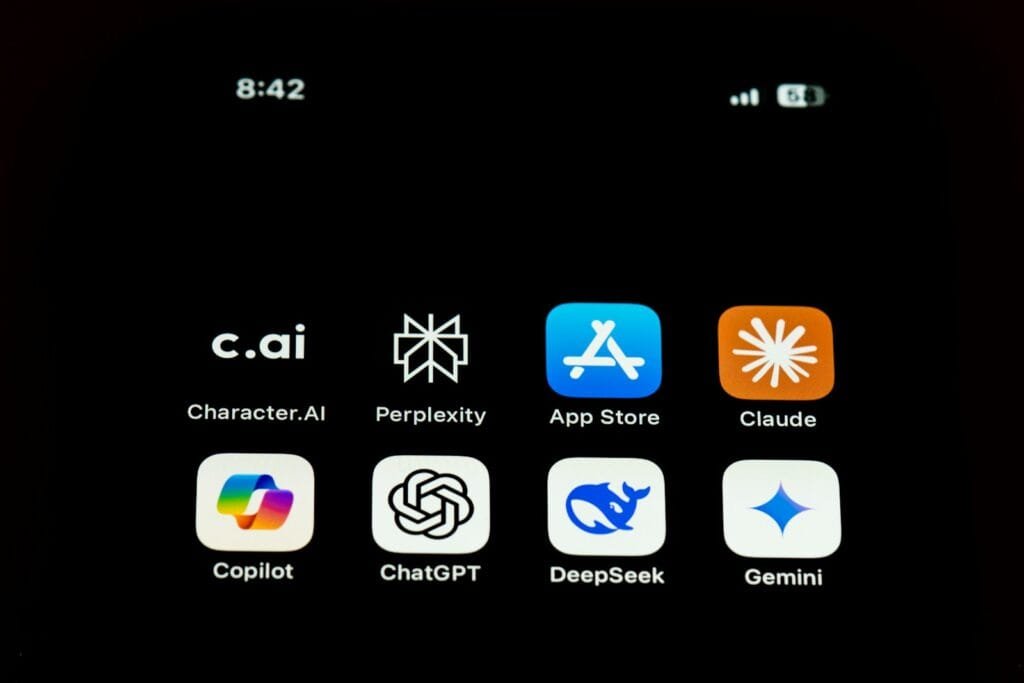




The DeepSeek LLM is a large language model designed for high-accuracy reasoning, code generation, structured output, and scalable API deployment. It forms the foundation of the broader DeepSeek model ecosystem, powering chat interfaces, automation systems, developer tools, and enterprise AI applications.
Unlike general-purpose conversational models that prioritize surface-level fluency, DeepSeek LLM is architected with a stronger emphasis on:
This article provides a complete technical and practical overview of the DeepSeek LLM — including architecture philosophy, capabilities, use cases, performance characteristics, and how it differs from other DeepSeek models.
DeepSeek LLM is a transformer-based large language model trained on large-scale multilingual and multi-domain datasets. It is optimized for:
It serves as the base reasoning layer behind several DeepSeek platform capabilities, including chat endpoints and automation workflows (see integration examples in ).
In simple terms:
DeepSeek LLM is the general-purpose reasoning engine that powers DeepSeek’s AI infrastructure.
DeepSeek LLM supports:
It can maintain context across extended interactions (depending on deployed context window configuration).
One of the strongest use cases of DeepSeek LLM is code generation.
Supported capabilities include:
This makes it suitable for:
DeepSeek LLM is optimized for:
This makes it suitable for:
A key differentiator for production use:
DeepSeek LLM can produce:
This significantly reduces:
For API use cases, this reliability is critical.
While exact internal training details may not be fully public, DeepSeek LLM follows modern transformer-based architecture principles:
The design philosophy emphasizes:
| Design Priority | Why It Matters |
|---|---|
| Logical consistency | Reduces contradictions |
| Deterministic structure | Better for APIs |
| Code reliability | Minimizes non-runnable output |
| Scalable inference | Suitable for enterprise load |
Rather than optimizing only for conversational smoothness, DeepSeek LLM is optimized for production reliability.
DeepSeek offers multiple specialized models. DeepSeek LLM acts as the foundational generalist model.
| Model | Primary Focus |
|---|---|
| DeepSeek LLM | General reasoning & generation |
| DeepSeek Chat | Conversational interface layer |
| DeepSeek Coder | Code-specialized optimization |
| DeepSeek Math | Mathematical reasoning focus |
| DeepSeek VL | Vision-language multimodal tasks |
In many implementations:
Depending on deployment configuration, DeepSeek LLM supports:
For production systems, this enables:
Integration patterns are demonstrated in the platform documentation and API guides .
DeepSeek LLM is accessible via RESTful API endpoints.
Typical usage pattern:
/chat for conversational flow/generate for direct text/code output/analyze for structured reasoningKey API advantages:
This makes it compatible with:
DeepSeek LLM is designed for:
In real-world developer workflows, the model is often evaluated on:
These metrics matter more than generic “fluency” benchmarks for production systems.
No model is perfect; DeepSeek LLM is optimized for practical developer workflows rather than purely creative conversation.
| Feature | DeepSeek LLM | Generic Chat LLM |
|---|---|---|
| Structured output | Strong | Moderate |
| Code reliability | High | Variable |
| API integration | Native-first | Sometimes layered |
| Workflow automation | Strong | Prompt-dependent |
| Enterprise scalability | Designed for | Depends on provider |
DeepSeek LLM prioritizes deterministic output behavior — critical for backend automation.
DeepSeek LLM is best suited for:
It is especially effective when:
DeepSeek LLM is not just a conversational model — it is a reasoning engine optimized for production systems.
It combines:
For teams building scalable AI-powered products, DeepSeek LLM provides the foundational intelligence layer on which specialized models and automation systems can be built.